



HOME >> 海外出版社刊 洋書販売 新着書籍 >>
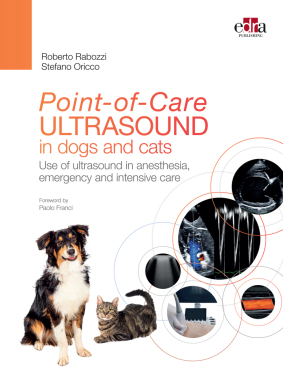
Point-of-Care ultrasound in dogs and cats
Edra Publishing US LLC
| Author | : | Roberto Rabozzi / Stefano Oricco |
価格:29,040円 (本体 26,400円+税) 送料サービス
・Release: 2023
・ISBN: 9781957260235
・376 Pages
・Trim Size: 216.0 X 22.0 X 280.0 ・Hardcover
Description
For the first time, also in veterinary medicine, a text that applies the Point-of-Care ultrasound approach (PoCUS) and which uses the understanding of the ultrasound sign within a dynamic context, that of the most common clinical syndromes in emergency and intensive care, is available. The volume is characterized by a practical approach to clinical syndromes thanks to diagnostic and therapeutic algorithms based on the patient's problem (dyspnoea, shock, congestion) and not on the pathology of the single organ. The authors guide the reader through a real training path that starts from the setting of reasoning to address hemodynamic problems, and then provides the method to correctly perform and interpret the ultrasound sign by associating it with a normal or pathological condition. Ultrasounds for the evaluation of cardiac function, pleuro-pulmonary and abdominal structures are routine in human medicine but represent an important frontier for the veterinarian who wants to face the new professional challenges in the care of their patients. The rich iconography of the volume is completed by 75 videos accessible with QR-Codes, showing the techniques for acquiring ultrasound images and the relative movements of the probe.
Table of Contents
- Cover
- Title
- Copyright
- AUTHORS
- Table of Contents
- Video index
- FOREWORD
- PART I • PRINCIPLES OF HAEMODYNAMICS AND POINT-OF-CARE ULTRASOUND
- CHAPTER 1: OPTIMISATION OF THE ULTRASOUND IMAGE
- The Physics of ultrasound
- Image formation
- Propagation, reflection and refraction
- Resolution
- Doppler Physics
- Doppler Technique
- Transducers, ultrasound system adjustments and recognition of artefacts
- Transducers
- Ultrasound system settings and adjustments for image optimisation
- Artefacts
- Scanning techniques
- Recommended reading
- CHAPTER 2: PRINCIPLES OF HAEMODYNAMICS
- Cardiovascular physiology
- Heart-circulation interaction
- Heart-lung interaction
- Alveolar, pleural and transpulmonary pressure
- Venous return, cardiac output and central venous pressure
- Integration of the Guyton and Campbell curves for the study of the interaction between heart and lungs
- Clinical applications
- Fluid responsiveness
- Recommended reading
- PART II • SCANNING TECHNIQUES FOR APPARATUS AND RECOGNITION OF ULTRASOUND SIGNS
- CHAPTER 3: ULTRASOUND IN HAEMODYNAMICS ASSESSMENT. FOCUSED CARDIAC ULTRASOUND
- Performing the transthoracic echocardiographic examination
- Choice of the type of probe
- Image optimisation
- Methods for execution
- Echocardiographic views
- Assessment of the left atrium and ventricle size
- Stroke volume calculation through echocardiography
- Repeatability, accuracy and learning curve of the FoCUS examination
- Study of the systolic and diastolic ventricular function
- Echocardiographic study of the systolic function
- Diastolic function
- Echocardiographic study of the diastolic function
- Study of the caudal vena cava
- Hepatic window
- Subcostal window
- Splenorenal window
- Recommended reading
- CHAPTER 4: THORACIC ULTRASONOGRAPHY
- Thoracic ultrasound anatomy and direct and indirect ultrasound of the lung
- Lung ultrasound semeiotics: pleuropulmonary artefacts and signs
- Vertical artefacts
- Pleuropulmonary signs
- Image optimisation and choice of the type of probe
- Investigation methods
- Patient positioning
- Type of examination
- Main ultrasound patterns in the various lung aeration pictures
- Normal air/water ratio
- Interstitial syndrome
- Alveolar syndrome
- Disorders of the pleura and pleural space
- Mixed pleuropulmonary pictures
- Ultrasound of pleural effusions
- Recommended reading
- CHAPTER 5: POINT-OF-CARE ULTRASOUND OF THE ABDOMEN
- Image optimisation and choice of the type of probe
- Indications and signs of Point-of-Care ultrasound of the abdomen
- Ultrasound signs in the patient with trauma and in the patient with acute abdomen
- Trauma patients
- Non-traumatic acute abdomen
- Recommended reading
- PART III • PRACTICAL APPLICATION OF POINT-OF-CARE ULTRASOUND IN THE MAIN CLINICAL SYNDROMES
- CHAPTER 6: FLUID RESPONSIVENESS. CLASSIFICATION, OPTIMISATION AND MONITORING OF THE EFFECTS
- Preload assessment according to response probability
- Predictive indices of fluid responsiveness and Point-of-Care ultrasound
- Recommended reading
- CHAPTER 7: SHOCK AND HYPOTENSION. CLINICAL APPROACH
- Definitions
- Recognition and treatment of the hypoperfused patient
- Diagnostic and therapeutic protocols
- Diagnostic algorithms in the various types of shock
- Recommended reading
- CHAPTER 8: FLUIDS AND INOTROPIC AND VASOACTIVE DRUGS. MONITORING THE EFFECTS
- Venous return and ventriculo-arterial coupling: the two main determinants of the interaction between heart and circulation
- Venous return
- Ventriculo-arterial coupling
- Cardiac work and ventricular efficiency
- Influence of the neurovegetative system on Ea/Ees. Clinical examples
- Main effects of the drugs used on the critical patient
- Fluids
- Dynamic elastance (Eadyn)
- Norepinephrine
- Pimobendan
- Dexmedetomidine
- Dobutamine
- Halogenates
- Propofol
- Opioids
- Ketamine
- Recommended reading
- CHAPTER 9: SUSPECTED PULMONARY THROMBOEMBOLISM. INTEGRATED APPROACH
- Introduction to pulmonary thromboembolism
- Main integrated ultrasound signs
- Lung ultrasound
- FoCUS examination
- Differential diagnosis of acute and chronic pulmonary thromboembolism
- Recommended reading
- CHAPTER 10: USE OF POINT-OF-CARE ULTRASOUND IN CARDIAC ARREST AND IN CARDIOPULMONARY RESUSCITATION
- Use of ultrasound in recognising cardiac arrest
- Ultrasound recognition of reversible causes for cardiac arrest
- Hypovolaemia
- Cardiac tamponade
- Tension pneumothorax
- Pulmonary thromboembolism
- Monitoring the efficacy of pulmonary resuscitation
- Assessment of ventricular function and preload in post-arrest ROSC
- Recommended reading
- CHAPTER 11: DIFFERENTIAL DIAGNOSIS OF DYSPNOEA
- Main integrated ultrasound signs
- Lung disorders
- Disorders of the pleural space
- Disorders of the airways
- Recommended reading
- CHAPTER 12: ULTRASOUND APPROACH TO THE POLYTRAUMATISED PATIENT
- Main ultrasound signs
- Recommended reading
- CHAPTER 13: ULTRASOUND MANAGEMENT OF VENTILATORY SUPPORT IN THE CRITICALLY ILL PATIENT
- Ventilation and perfusion in the normal and pathological lung
- Effects of ventilatory support on the lung
- Main types of ventilatory support
- Various image diagnostics techniques in pulmonary ventilation management
- Radiology
- Computerised Tomography (CT)
- Point-of-Care lung ultrasound
- Ventilation strategies and monitoring of pulmonary recruitment-derecruitment during CPAP or mechanical ventilation in the pathological lung
- Ultrasound monitoring of the haemodynamic effects of mechanical ventilation and CPAP
- Clinical application of Point-of-Care ultrasound in ventilatory support management in the dog and cat
- Recommended reading
- CHAPTER 14: HAEMODYNAMIC, PULMONARY AND SYSTEMIC CONGESTION
- Introduction to the differential assessment of the congestive state
- Left congestive heart failure
- Right congestive heart failure
- Use of Point-of-Care ultrasound in the assessment of pulmonary congestion
- Use of Point-of-Care ultrasound in the assessment of haemodynamic congestion
- Monitoring pulmonary congestion
- Recommended reading
- CHAPTER 15: DISORDERS OF THE PLEURAL AND PERICARDIAL CAVITY
- Pleural effusion
- Treatment of pleural effusion
- Pericardial effusion
- Anatomy and physiology of the pericardium
- Pathophysiology of cardiac tamponade and haemodynamic impact
- Point-of-Care ultrasound diagnosis of cardiac tamponade
- Treatment of cardiac tamponade
- Pneumothorax
- Point-of-Care ultrasound diagnosis of pneumothorax
- Treatment of pneumothorax
- Recommended reading
- CHAPTER 16: ULTRASOUND-GUIDED PROCEDURES
- Image optimisation and techniques for execution
- Long Axis In-Plane approach
- Short-Axis Out-of-Plane approach
- Oblique-Axis approach
- Ultrasound-guided vascular access procedures
- Ultrasound anatomy of arterial and venous vessels in the dog and cat
- Choice of vessel and catheter
- Ultrasound-guided centesis (abdominal and thoracic)
- Small ultrasound-guided clinical procedures
- Contraindications and complications
- Recommended reading
